Stories of Grace Paley
 Stories of Grace Paley (1922– ). Paley’s political beliefs inform her stories, but she never writes cant. Her Greenwich Village surroundings infuse her work, making New York City seem like a small town.
Stories of Grace Paley (1922– ). Paley’s political beliefs inform her stories, but she never writes cant. Her Greenwich Village surroundings infuse her work, making New York City seem like a small town.
 Stories of Isaac Babel (1894–1940). “Let me finish my work” was Babel’s final plea before he was executed for treason on the orders of Josef Stalin. Though incomplete, his work is enduring.
 Stories of John Cheever (1912–82). Seemingly confined to recording the self-inflations and petty hypocrisies of suburban WASPs, Cheever’s short fiction actually redefined the story form, mixing minimalism and myth to create uniquely American tragicomedy.
 Stories of Mavis Gallant (1922–2014). Expatriate experience and cultural contrasts energize the knowing, roomy fiction of the native Canadian, sometime Parisian, master.
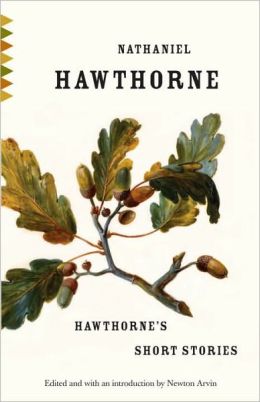 Stories of Nathaniel Hawthorne (1804–64). A child of the Romantic era, Hawthorne nonetheless remained haunted by his Puritan forefathers. Tales such as “Young Goodman Brown,” “My Kinsman, Major Molineux,” and “The Wives of the Dead,” are steeped in the subject matter and sensibility of colonial New England, and clouded by crime, sin, and persecution.
 Stories of Raymond Carver (1938–88). Culled from his own hard-drinking, working-class upbringing in the Pacific Northwest, Carver’s stories depict relationships in various states of decay, the unsung losses of unsung people, and the prolonged misery of ordinary people delivered in a sly understated tone sometimes called dirty realism.
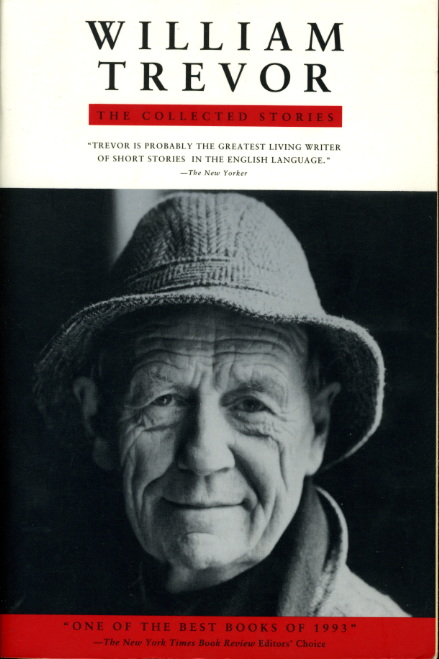 Stories of William Trevor (1928– ). Trevor is less an innovator than a perfectionist of the short story form, with each instance featuring two or three well-drawn characters, a stoutly alluring situation, and not a word out of place.
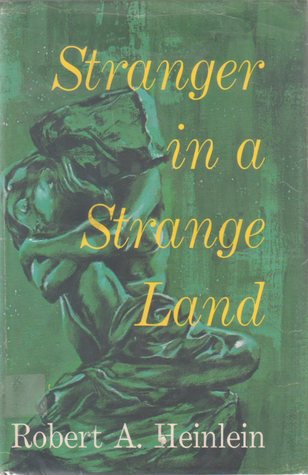 Stranger in a Strange Land by Robert A. Heinlein (1961). A counterculture favorite during the 1960s, this novel tells the story of Valentine Michael Smith, who was born during the first flight to Mars. Reared by Martians, the orphan returns to Earth as a young man, where he questions the customs and values taken for granted there.
 Street of Lost Footsteps by Lyonel Trouillot (1998). Although set during a single night of horrific violence in Port-au-Prince, this fierce, surreal novel resonates with Haiti’s long history of blood and broken dreams.
 Strangers in Paradise: Stories